Sikandra sits quietly on the outskirts of Agra, far enough from the crowds of Taj Mahal tourists to feel like your own discovery, yet grand enough to hold your attention for hours. Most travelers arrive expecting another tomb, another monument to rush through before moving to the next photograph. Then they walk through the red sandstone gateway and realize they have stumbled into something altogether different. The scale of the gardens catches them off guard. The peaceful atmosphere settles into their shoulders. Peacocks wander past as if they own the place. By the time most visitors leave, they understand why Sikandra deserves to be more than a brief stop between the Taj and Agra Fort.
This guide exists to help first time visitors understand what makes this place worth visiting, how to get there, what to expect when you arrive, and the small practical details that transform a rushed visit into something memorable. Whether you are planning a day trip from Delhi, using Sikandra as part of a longer Agra itinerary, or simply curious about what lies beyond the world's most famous monument, everything you actually need to know is here.
What Is Sikandra and Why Should You Care
Sikandra is the mausoleum of Emperor Akbar, the third and arguably greatest ruler of the Mughal Empire. Akbar lived from 1542 to 1605, a time when he controlled most of northern India and oversaw an era of cultural flowering in art, architecture, and literature. Unlike many emperors before him, Akbar became known not for conquest alone but for his surprising openness to different religions and ideas. He married women from different faiths, appointed talented people regardless of their background, and created policies aimed at bringing harmony between Hindu and Muslim populations. This inclusive vision shaped everything about his tomb.
The name Sikandra itself comes from Sikander Lodi, a Delhi sultan whose name was remembered in this region. When Akbar died in 1605, his son Jahangir took over completing the mausoleum according to his father's wishes. The construction stretched from 1605 until 1613, involving thousands of craftsmen and costing what would have been an enormous fortune at the time. What emerged was not like other Mughal tombs of the era. Instead of a single grand dome sitting above a raised platform, Akbar's tomb became something more expansive, more open, more philosophical. It spread across 119 acres of gardens, featuring four separate gateways, multiple levels, and architectural touches borrowed from different religious traditions.
The Architecture and What It Represents
Walking into Sikandra, you immediately notice something different from other Mughal monuments. The main structure is a five tiered pyramid, rising in descending squares like steps leading toward heaven. Red sandstone forms the primary material, adorned with delicate white marble inlays that catch the light differently depending on the time of day. The craftsmanship is evident in every carved panel, every geometrical pattern, every calligraphic detail.
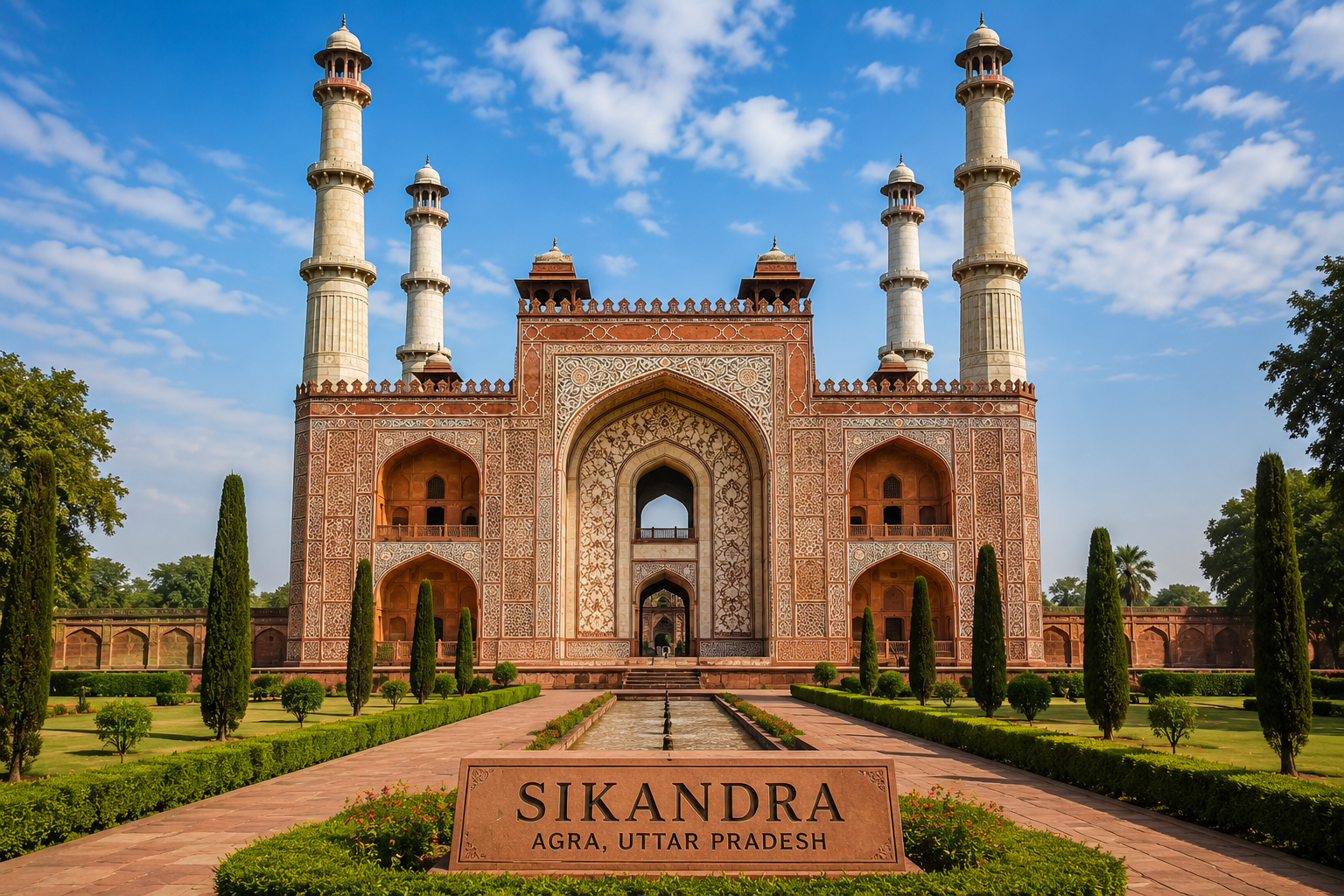
What makes Sikandra architecturally unique is its blending of styles. The gateway features arches inspired by Islamic design. The chattris, those small domed pavilions scattered across the complex, echo Hindu temple architecture. Buddhist and Jain design elements appear in subtle ways throughout the decoration. Quranic verses are inscribed alongside references to other faiths. This was not accidental. This was Akbar's statement in marble and sandstone, a physical manifestation of his belief that truth could be found in multiple traditions. Later historians would call this syncretic architecture, a sophisticated term for saying Akbar built his final resting place as a celebration of unity rather than division.
The false cenotaph sits on the highest level, carved from a single block of marble and inscribed with the 99 attributes of Allah. Akbar's actual tomb lies beneath, in a simple chamber at the heart of the structure. The burial chamber also contains the tombs of his daughters, Shakrul Nisha Begum and Aram Bano.
Around the mausoleum spreads a charbagh, the classic four part garden layout favored by Mughal emperors. Water channels once ran through these gardens, reflecting the sky and the architecture in still pools. Though the water has diminished over centuries, the garden structure remains recognizable. Peacocks, antelopes, and monkeys call these grounds home, giving Sikandra a living quality that purely restored monuments sometimes lack.
Getting to Sikandra Practically
Sikandra lies approximately 10 kilometers northwest of central Agra, positioned along the main Delhi-Agra highway. For most travelers, Sikandra is not a starting point but a stop during a larger Agra visit. Understanding how to reach it efficiently matters.
If you are staying in Agra city center, hiring a taxi or auto-rickshaw is the most straightforward approach. The ride takes about 20 to 30 minutes depending on traffic. Always agree on the fare before entering an auto-rickshaw, or use app based services like Ola or Uber which show upfront pricing. Many hotels in Agra can also arrange transport to Sikandra, sometimes combining it with visits to nearby Agra Fort or Itimad-ud-Daulah in a single organized tour. If you prefer traveling independently, local buses run from Agra toward Fatehpur Sikri and stop near Sikandra Chauraha, from where the entrance is a short walk.
If you are traveling from Delhi, you might consider stopping at Sikandra en route to or from Agra. The monument sits on the main highway route, making it a logical pause during a Delhi to Agra road trip. Many travelers heading back to Delhi from Agra choose to visit Sikandra on their return journey rather than making a dedicated trip.
From Agra Railway Station or Airport, transportation options remain consistent. Taxis, auto-rickshaws, and ride sharing services all operate from these hubs. Agra Airport sits about 12 kilometers away from Sikandra, while Delhi Airport is roughly 200 kilometers away. Most international visitors arrive via Delhi and either drive straight to Agra or take the Gatimaan Express train, which covers the distance in about 1 hour 40 minutes.
Entry Fees and Opening Hours
Sikandra opens daily from sunrise to sunset, approximately 6:00 AM until 6:00 PM. There is no single day of closure as found at some other Agra monuments, so you can plan your visit for any day that suits your schedule. Being an open air complex, visiting during daylight hours is necessary, though the atmosphere at sunrise or sunset often surpasses midday visiting.
Entry fees depend on your nationality. Indian citizens and visitors from SAARC nations (Bangladesh, Nepal, Bhutan, Pakistan, Sri Lanka, Maldives, Afghanistan) and BIMSTEC nations (Thailand, Myanmar) pay around 20 to 35 rupees per person. Foreign visitors from other countries pay approximately 250 rupees, though exact prices can fluctuate slightly and are worth confirming closer to your visit date. Children below 15 years typically enter free regardless of nationality.
Photography carries an additional fee. Bringing a regular camera for personal photography usually costs around 100 to 200 rupees. Professional equipment like tripods or drones faces restrictions, so verify current rules at the entrance if you plan using specialized gear. Mobile phones and compact cameras face no restrictions.
Best Time to Visit Sikandra
The climate of Agra shifts dramatically across the year, and timing your visit correctly makes an enormous difference to your comfort and enjoyment.
From October through March, Agra experiences its most pleasant weather. Daytime temperatures hover between 15 and 28 degrees Celsius, making the walk through Sikandra's extensive gardens thoroughly comfortable. This period encompasses peak tourist season, so expect larger crowds and higher accommodation prices. Within this window, late October and late February offer particularly sweet conditions, balancing pleasant weather with slightly fewer visitors compared to December and January. November remains an excellent choice, offering cool but not frigid conditions and generally clear skies.
Late November through early January brings the coldest weather, with mornings potentially dropping to single digits Celsius. Early morning fog sometimes blankets the area, though this typically burns off by mid morning. Pack warm layers if visiting during these weeks, though the cold dissipates quickly once the sun rises higher in the sky.
April through June represents the hot season. Temperatures regularly exceed 40 degrees Celsius, reaching as high as 45 degrees by May. Walking through gardens and across open courtyards becomes genuinely uncomfortable during these months. If you must visit during summer, plan for early morning or late afternoon exploration, and bring plenty of water.
July through September brings monsoon rains and humidity. The streets around monuments often see scattered showers, though Sikandra's large open spaces mean you are not trapped if weather turns. Hotel rates drop significantly during these months, and crowds thin out considerably. For travelers flexible with timing and seeking budget accommodation, this shoulder season works, though the heat and humidity combined can feel intense.
What to See and Do at Sikandra
Allow a minimum of 90 minutes at Sikandra to see the main attractions without feeling rushed. Two hours gives you time to explore comfortably, taking photographs and sitting in the gardens to absorb the atmosphere. Three hours allows for a slower pace, perhaps including time with a guide if you have arranged one.
The journey through Sikandra typically begins at the southern gateway, the most impressive of the four entrances. This gate stands as a red sandstone structure adorned with white marble inlay work, featuring arches and decorative panels that immediately establish the monument's sophistication. From here, the path leads through landscaped gardens toward the main mausoleum.
The five tiered pyramid structure dominates your approach. As you draw closer, architectural details emerge. Chattris sit at each corner of the building, providing geometric balance to the composition. The marble inlays become clearer, geometric patterns and floral designs covering the sandstone surface. The craftsmanship here rewards careful looking. Spend time noticing the care invested in each panel.
The actual access to the burial chamber happens through the southern pishtaq, an arched entrance leading into the interior. The central chamber sits at the heart of the structure, small and intimate compared to the soaring spaces around it. Akbar's remains rest here, along with those of his daughters. The chamber contains the false cenotaph carved from a single marble block, an intricate piece of artistry that draws visitors into contemplation of mortality and legacy.
Outside the main structure, Lodi Tomb sits near the entrance area, an anonymous tomb from the earlier Lodi dynasty predating Akbar's construction. This octagonal structure, though less elaborate than the main mausoleum, provides architectural context for understanding how design evolved across different eras.
The grounds themselves deserve time. Walk along the garden pathways. Listen for the peacocks. Notice the antelopes if you spot them. Sit on one of the benches if your feet need rest. The best photographs often come not from standing at the most obvious angle but from exploring different vantage points throughout the complex. The red stone photographs beautifully in morning and evening light, quite differently from the flatter appearance during bright midday sun.
Practical Things to Know Before Arriving
Comfortable footwear matters significantly. Sikandra requires walking across uneven garden paths and stone surfaces. A good pair of walking shoes with reasonable support makes exploration far more pleasant than flip flops or unsupportive sandals. The complex spreads across an enormous area, and you will appreciate cushioned soles after an hour of wandering.
Bring water. Agra heat, even during pleasant season, dehydrates quickly. Carrying a water bottle or purchasing bottled water at the entrance means you stay hydrated while exploring. Small food items are generally acceptable, though verifying current rules at entry is worth doing. Large bags and professional photography equipment face restrictions, so pack light if possible.
Photography restrictions exist inside the main chamber to preserve the marble and prevent damage. The guidebook available at entry clarifies rules. Taking photographs outside the chamber is free with the photography fee mentioned above, though silencing your camera shutter by necessity shows respect for other visitors enjoying the serene space.
Dress modestly. Sikandra is not a religious site requiring rigid dress codes like a functioning mosque might enforce, but respectful clothing shows consideration for the monument's cultural significance. Covering shoulders and knees is appropriate. Many Indian visitors dress quite formally when visiting heritage sites, and casual beachwear would appear out of place. Hat and sunglasses prove practical during sunny months, protecting against the intense sun.
Engage with a guide if historical depth interests you. Official guides operate from the entrance kiosk and offer fascinating context about Akbar's life, the architectural significance of what you are seeing, and the historical situation of the Mughal period. The cost is modest and often enhances understanding considerably. Alternatively, audio guides provide similar information at your own pace.
Sikandra in the Context of Agra
Most travelers do not visit only Sikandra. This monument sits within an ecosystem of Mughal heritage sites scattered across Agra. Understanding where Sikandra fits helps you plan an efficient itinerary.
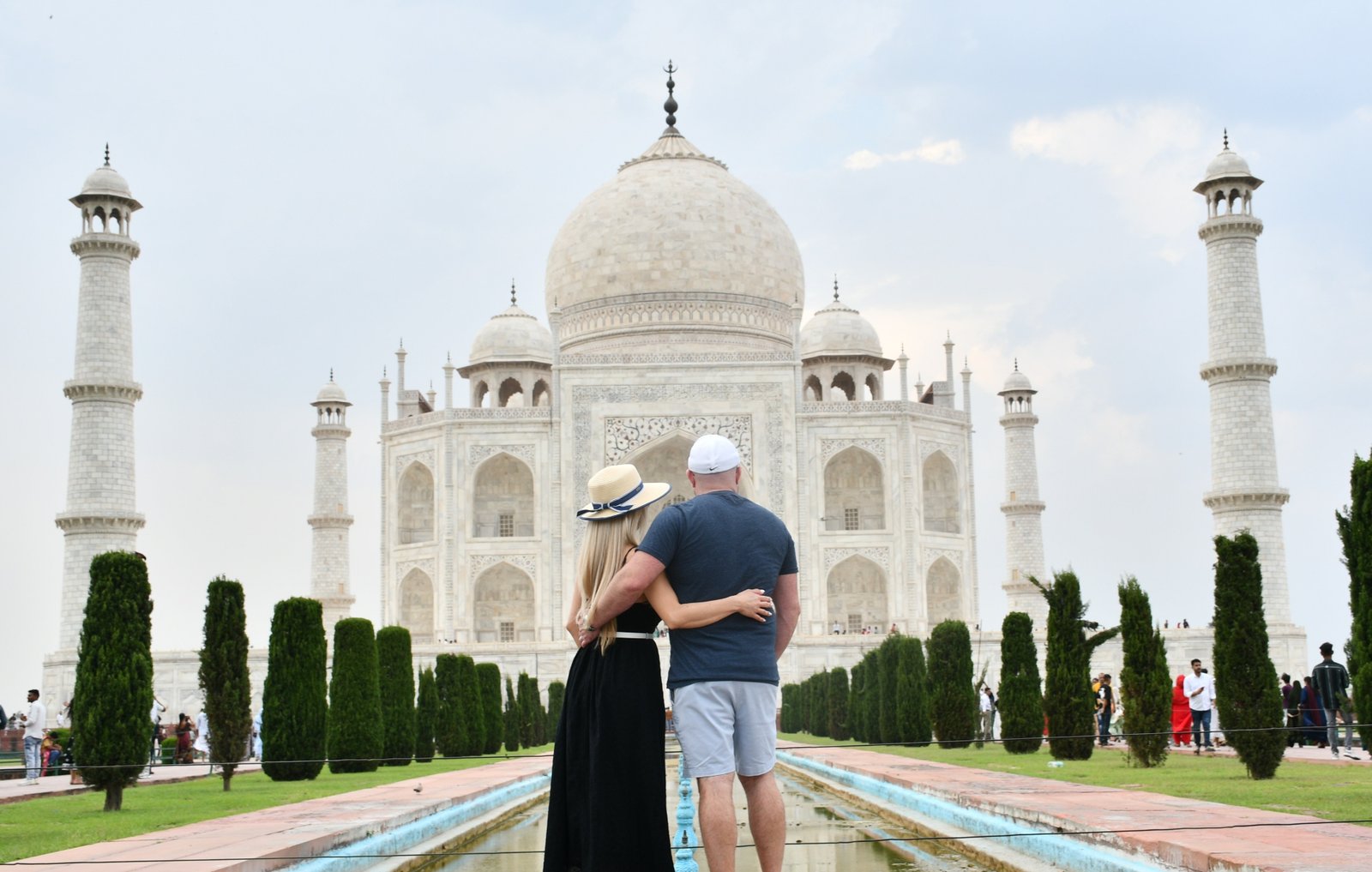
The Taj Mahal, obviously, stands as Agra's primary attraction, visited by millions annually. Built by Akbar's great grandson Shah Jahan as a monument to his wife Mumtaz, the Taj represents the pinnacle of Mughal architecture where Sikandra represents Akbar's more inclusive vision. Visiting both provides contrasting perspectives on two great emperors separated by a generation.
Agra Fort, where emperors lived and ruled, sits about 10 kilometers from Sikandra. Its walls contain palaces, audience halls, and gardens revealing daily life in the Mughal court. Many travelers combine Sikandra and Agra Fort in a single outing.
Itimad-ud-Daulah, sometimes called the Baby Taj for its delicate marble work, sits much closer to central Agra, about 5 kilometers away. This smaller mausoleum built for a Mughal noblewoman showcases architectural excellence on an intimate scale.
Beyond these, Fatehpur Sikri, a largely abandoned city built by Akbar himself about 35 kilometers away, preserves an entire Mughal capital. This demands a more significant time commitment but offers extraordinary insights into Akbar's vision for a city.
Many first time Agra visitors structure their visit as follows. Arrive early, visit Taj Mahal at sunrise, rest midday at the hotel, then explore Sikandra in late afternoon, finishing with either Agra Fort or Itimad-ud-Daulah depending on energy levels. Alternatively, visit Sikandra first thing in the morning before Taj Mahal crowds intensify, since Sikandra remains less visited year round. This sequence works well, as it breaks up the day and keeps sightseeing manageable.
Safety and Practical Considerations
Sikandra remains a safe destination. The archaeological authorities maintain security presence, and the site receives regular maintenance. Women traveling alone can visit comfortably during daylight hours. Standard travel precautions, such as not carrying excessive valuables and remaining aware of surroundings, apply as they do everywhere.
Medical facilities exist nearby if needed. Pushpanjali Hospital operates 24 hours close to Sikandra along the main highway, equipped for emergencies. Pharmacies line the roads around the monument complex, selling standard supplies.
The ground remains stable and safe for walking. Uneven surfaces in some garden areas require watching your step, particularly if mobility limitations exist. Wheelchair accessibility remains limited due to the gardens' terrain and the steps leading to upper levels of the mausoleum.
Photography by other visitors happens constantly. If you appear in others' photographs, this reflects normal tourism practice. If you prefer privacy, visiting during early morning or late afternoon reduces crowds and your likelihood of appearing in countless stranger's photos.
Monkeys sometimes venture into the complex, though they generally ignore visitors focused on the monuments. If monkeys approach, do not feed them or make sudden movements. They are wild animals and can bite if they feel threatened or are accustomed to receiving food.
Budget Planning for Your Visit
Sikandra ranks among India's most affordable heritage sites to visit. Entry fees of 20 to 35 rupees for Indian visitors or 250 rupees for foreign tourists cost far less than many similar monuments worldwide. Photography fees add another 100 to 200 rupees if you bring a camera. Guides, while enhancing experience, cost roughly 200 to 500 rupees for 1 to 2 hours depending on your negotiation and the guide's experience level.
Getting to Sikandra from Agra city costs 100 to 200 rupees by auto-rickshaw, depending on distance traveled and fuel prices at the time of visiting. App based taxi services provide transparency on costs, though they may cost 50 to 100 rupees more than negotiated auto-rickshaw fares.
A complete visit including entry, photography fee, transport, and potentially a guide totals around 500 to 800 rupees for most travelers, roughly 6 to 10 US dollars. This exceptional value makes Sikandra an easy addition to any Agra itinerary.
Budget travelers can reduce costs by visiting only during sunrise or sunset when photography fees are sometimes waived, though verifying current policy at entry is wise. Traveling with others allows splitting auto-rickshaw costs, bringing per person expenses down further.
Common Mistakes First Time Visitors Make
Visiting midday during hot months represents the most common planning error. Arriving between 11 AM and 3 PM during May, June, April, or July means enduring intense heat with limited shade in the gardens. Morning or late afternoon visits prove infinitely more pleasant.
Rushing through Sikandra as merely a photo stop causes visitors to miss what makes the monument special. The atmosphere, the gardens, the intricate details all require time to appreciate. Building 90 minutes minimum into your itinerary prevents this mistake.
Wearing inappropriate footwear leads to discomfort or even minor injuries on the uneven surfaces. Flip flops or new shoes you have not broken in make the walking experience miserable. Comfortable, already worn in shoes make an enormous difference.
Not bringing water creates unnecessary dehydration. Agra's dry climate and the monument's large open areas make dehydration happen quickly, particularly in non winter months. Starting your visit well hydrated and carrying a refillable bottle prevents this common issue.
Failing to engage with the monument's history reduces its impact. Sikandra represents something genuinely meaningful about one of India's greatest emperors. Spending five minutes learning basic context about Akbar and his vision transforms viewing the architecture from admiring pretty stonework to understanding a historical statement. A guide, an audio guide, or even a few minutes reading the signage at the entrance creates this shift.
Frequently Asked Questions About Sikandra
How long should I spend at Sikandra?
A minimum of 90 minutes allows seeing the main monuments without feeling rushed. Two hours is comfortable for most visitors. Three hours permits a slower pace and deeper exploration. Very few visitors require more than three hours unless they are spending significant time with a guide or exploring every corner in detail.
Can I visit Sikandra and Taj Mahal on the same day?
Yes. Many travelers do exactly this. Visiting Taj at sunrise, resting midday, then Sikandra in late afternoon works well. Both sit within 12 to 15 kilometers of each other. The combination gives contrasting perspectives on two great Mughal emperors.
Is Sikandra crowded?
Sikandra receives far fewer visitors than the Taj Mahal, making it noticeably more peaceful. Weekdays see lighter crowds than weekends. Early morning and late afternoon are less crowded than midday. You will see other tourists, but not in the overwhelming numbers found at the Taj.
Do I need a guide at Sikandra?
A guide enhances understanding of the architecture and history significantly. If you enjoy learning historical context, guides offer excellent value. If you prefer simply walking and observing, that remains completely valid. Audio guides provide an alternative for those wanting information without engaging a person.
What is the dress code for Sikandra?
No strict dress code exists, but modest clothing is appreciated. Covering shoulders and knees is appropriate. Many tourists wear regular sightseeing clothes without issue, though respectful attire shows cultural awareness.
Can I take photographs inside the main chamber?
Photography restrictions apply inside the main burial chamber to protect the marble. Outside photography is permitted with a photography fee. Verify specific rules at the entrance if you plan professional equipment.
Is Sikandra accessible for people with mobility limitations?
Partial accessibility exists. The main pathways through gardens are walkable for most people. The mausoleum requires climbing stairs to reach upper levels. Wheelchair users would struggle significantly with the uneven garden terrain and multiple steps. Visitors with mobility challenges should discuss specific needs with staff at entry.
What if I visit during monsoon season?
Monsoon brings scattered rains and humidity. Sikandra's large open spaces mean you are not trapped indoors if weather turns. Bring an umbrella if visiting during July to September. Crowds thin significantly, and hotels offer better rates during this season.
Do I need to book Sikandra tickets in advance?
Tickets are purchased at the entrance on the day of visit. Advance booking is not required. Entry is straightforward for all visitors.
Final Reflections on Visiting Sikandra
Sikandra works best for travelers seeking to look beyond the most famous monument. You come here not because you must, but because you choose to understand Akbar and his vision more deeply. The monument rewards that curiosity. Walking through the gardens, understanding the architectural choices, considering what Akbar meant when he blended different religious traditions into his tomb - these create meaning beyond beautiful photography.
Most travelers find Sikandra unexpectedly moving. The combination of scale and serenity, the intricate craftsmanship, the historical weight all settle into your consciousness as you walk. You leave with a sense that you have encountered something genuine, not just another tourist checkpoint.
Sikandra remains one of India's great architectural achievements and one of the lesser known major monuments in a country full of them. Include it in your Agra plans, give it the time it deserves, and discover why those who take the time to visit often consider it among their trip highlights.