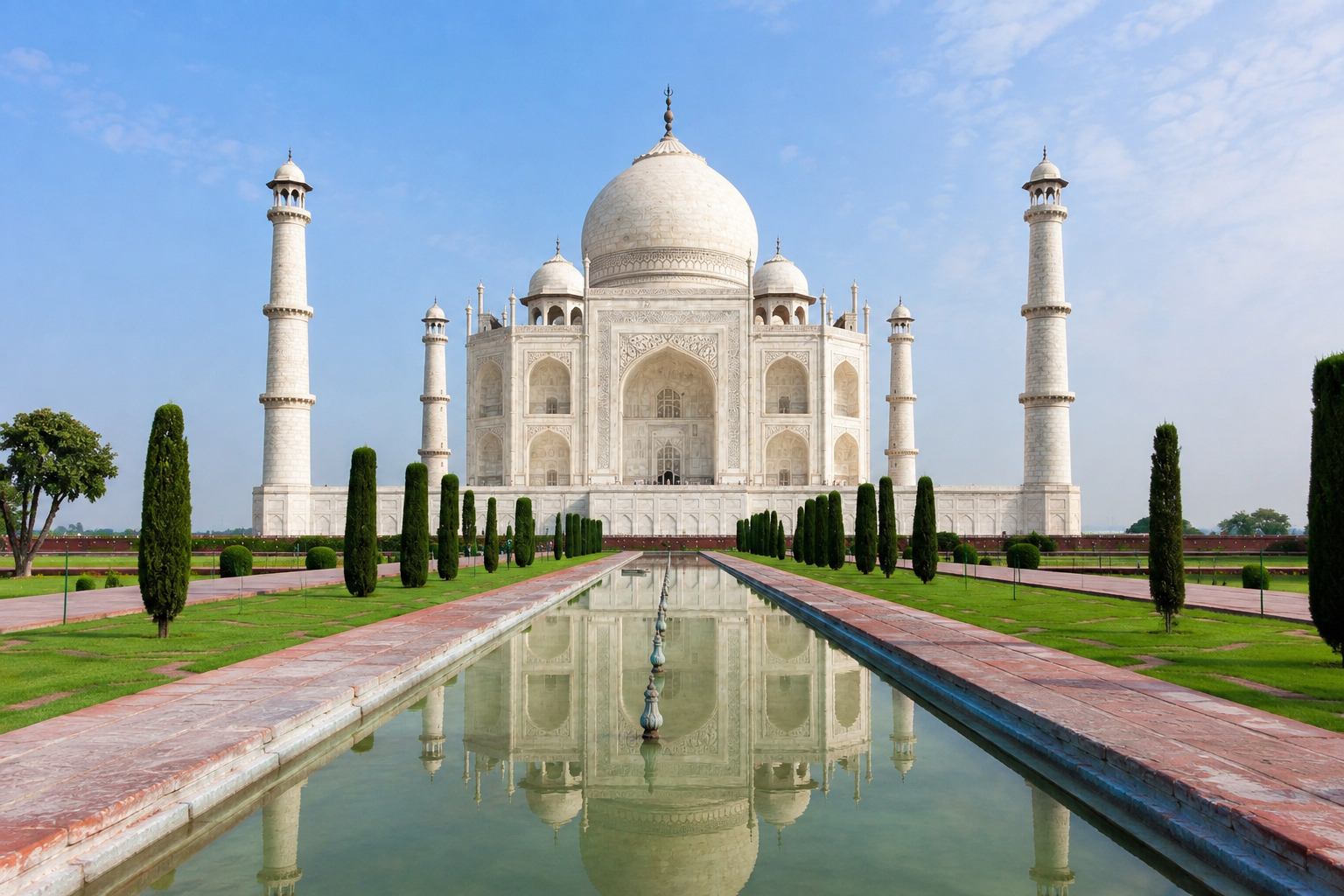
The Taj Mahal is one of India's most famous historical monuments. Its white marble architecture, beautiful gardens and detailed stonework attract millions of visitors from around the world. Before visiting, you should know about its opening hours, ticket prices, entry gates, travel options and important visitor rules.
If you are planning your Agra trip, explore Taj Mirror for helpful Agra travel guides, sightseeing information and Taj Mahal tour options.
This complete Taj Mahal Guide 2026 covers everything a first-time visitor needs to plan a comfortable visit. You will also find useful tips for choosing the best visiting time and exploring other famous attractions in Agra.
About the Taj Mahal
The Taj Mahal is a white marble mausoleum located on the banks of the Yamuna River in Agra, Uttar Pradesh. Mughal Emperor Shah Jahan commissioned it in memory of his wife Mumtaz Mahal.
Construction began in 1632, and the main mausoleum was completed in 1648. Additional sections of the complex were completed later. Thousands of skilled artisans, stoneworkers, calligraphers and craftsmen contributed to its construction.
In 1983, UNESCO recognised the Taj Mahal as a World Heritage Site. Today, it is widely regarded as one of the finest examples of Mughal architecture.
Who Built the Taj Mahal?
The Mughal Emperor Shah Jahan ordered the construction of the Taj Mahal after the death of his wife Mumtaz Mahal in 1631.
The chief architect is traditionally identified as Ustad Ahmad Lahori. Skilled craftsmen from different parts of the Mughal Empire and beyond worked on the monument.
Why Was the Taj Mahal Built?
Shah Jahan built the Taj Mahal as a memorial to Mumtaz Mahal. Its design, marble decoration and carefully planned gardens reflect the artistic traditions of the Mughal period.
The monument also contains the cenotaphs of Mumtaz Mahal and Shah Jahan inside its main chamber. Their actual graves are located in the lower crypt.
When Was the Taj Mahal Completed?
The main mausoleum was completed in 1648, while other sections of the complex continued to be developed until approximately 1653.
Taj Mahal Timings and Weekly Closing Day
Before planning your visit, check the opening schedule carefully. The Taj Mahal follows sunrise and sunset timings rather than fixed daily opening hours.
Visitor InformationDetails
Opening time | 30 minutes before sunrise
Closing time | 30 minutes before sunset
Weekly closing day | Friday
Other visiting days | Saturday to Thursday
Night viewing | Selected full-moon dates
The Taj Mahal remains closed to general visitors every Friday. The mosque inside the complex remains available for Friday prayers.
Opening and closing times change with the seasons because they depend on sunrise and sunset.
Travel tip: Arrive around 30 to 45 minutes before sunrise so you have enough time for security checks and entry arrangements.
Taj Mahal Ticket Price 2026
The ticket price depends on your nationality and whether you want to enter the main mausoleum.
The standard published daytime entry charges are:
Visitor CategoryEntry Fee
Indian visitors | ₹50
SAARC and BIMSTEC visitors | ₹540
Other foreign visitors | ₹1,100
Children below 15 years | Free
An additional ₹200 is charged for visitors who want to enter the main mausoleum.
Applicable additional charges, including any ADA fee, should be checked during official ticket booking. Online booking may offer a small discount.
How to Book Taj Mahal Tickets Online
Booking tickets online can save time at the entrance.
Follow these steps:
- Visit the official Archaeological Survey of India ticket portal.
- Select the Taj Mahal as your monument.
- Choose your visiting date and visitor category.
- Enter the required visitor details.
- Select the main mausoleum option if you want to visit it.
- Complete the payment.
- Save your e-ticket and carry the required identification.
Official ticket website: https://asi.paygov.org.in/
You can also check visitor information on the official Taj Mahal website:
Important: Always check the final ticket amount and booking conditions before making payment. Ticket prices and additional charges can change.
Best Time to Visit the Taj Mahal
The best time to visit depends on the weather, crowds and the kind of experience you want.
Generally, October to March is a comfortable period for exploring Agra. The weather is usually cooler than during the summer months.
Best Time of Day
Early Morning: Sunrise is a popular time because the weather is cooler and the monument receives soft morning light. It is also a good choice if you want to avoid some of the daytime crowds.
Afternoon: You can explore the monument in the afternoon, but summer temperatures can make walking uncomfortable. Carry water and protect yourself from the sun.
Evening: Late afternoon offers pleasant light and a different view of the marble monument. Visitor numbers can be higher, especially during holidays.
Best Season to Visit
- October to March: Generally comfortable for sightseeing.
- April to June: Hot summer weather. Plan an early morning visit.
- July to September: Monsoon season. Expect humidity and occasional rain.
Sunrise or Sunset: Which Is Better?
Choose sunrise if you prefer cooler temperatures, softer light and a quieter start to your sightseeing day.
Choose sunset if your schedule does not allow an early morning visit.
Both times offer beautiful views, so your choice should depend on your travel schedule and weather conditions.
Taj Mahal Entry Gates Explained
The Taj Mahal has three named entry gates, but their current entry arrangements are different.
Eastern Gate
The Eastern Gate is commonly used by visitors staying around Taj East Gate Road and nearby hotels.
Shilpgram is the main parking area for visitors approaching from this side. Battery buses and golf carts are available to help visitors reach the monument area.
Western Gate
The Western Gate is another major entrance and is commonly used by visitors arriving from the main city side.
Parking is available near Amrood Ka Teela. Visitors can use available transport services to reach the gate.
Southern Gate
The Southern Gate is currently used as an exit only. Do not plan your entry through this gate without checking the latest official instructions.
Helpful tip: Choose your gate according to your hotel, parking location and current entry arrangements. This can save unnecessary walking.
How to Reach the Taj Mahal
Agra is well connected to major Indian cities by train, road and air. You can choose the most convenient option according to your starting location.
By Train
Agra has several railway stations, including:
- Agra Cantt Railway Station
- Agra Fort Railway Station
- Raja Ki Mandi Railway Station
Agra Cantt is a major railway station for visitors arriving from Delhi and other cities.
From Agra Cantt, the Taj Mahal is approximately 6 km away. You can hire a taxi, auto-rickshaw or other local transport to reach the monument.
By Air
Agra has Kheria Airport, although flight availability and connectivity may be limited.
Delhi's Indira Gandhi International Airport is another option for travellers coming from other countries or distant Indian cities. From Delhi, you can continue to Agra by road or train.
By Road
Agra is connected to Delhi, Jaipur, Mathura and other nearby destinations through major highways.
Travellers from Delhi can use the Yamuna Expressway. Depending on traffic and your starting point, the journey generally takes around 3 to 4 hours.
If you are planning a same-day trip, leave early to allow enough time for sightseeing.
Things to See Inside the Taj Mahal
The Taj Mahal complex includes several architectural features worth exploring. Avoid rushing directly to the main mausoleum because many interesting details are spread throughout the property.
Main White Marble Mausoleum
The central mausoleum is the most recognised part of the complex. Its large dome, symmetrical design and detailed marble decoration make it the main attraction.
Main Gateway
The impressive red sandstone gateway provides the famous framed view of the Taj Mahal. It is also a popular photography location.
Charbagh Garden
The garden follows a traditional Mughal layout, with pathways, water channels and reflecting pools.
Take some time to walk through the garden and enjoy different views of the monument.
Mosque and Guest House
Two red sandstone buildings stand on either side of the main mausoleum. One is a mosque, while the other is commonly called the guest house.
Their balanced arrangement contributes to the symmetry of the complex.
Marble Inlay Work
Look closely at the floral patterns and decorative details on the marble surfaces. Craftsmen used carefully cut pieces of coloured stone to create these designs.
Taj Mahal Night Viewing
Night viewing gives visitors a chance to see the monument under moonlight.
It is available on the full-moon night and two nights before and after the full moon, subject to official restrictions. Night viewing is not available on Fridays or during the month of Ramadan.
Separate tickets are required, and visits take place in limited batches.
Night viewing rules and available dates can change, so check the official ASI booking information before planning your visit.
Important Rules and Things You Cannot Carry
Security checks take place at the entrance. Carrying unnecessary items can slow down your entry.
Some important rules include:
- Drones are strictly prohibited.
- Food and smoking are not allowed inside.
- Weapons, ammunition and sharp objects are prohibited.
- Tripods require permission.
- Mobile phones should be kept switched off or on silent mode.
- Large bags and unnecessary belongings should be avoided.
- Photography is prohibited inside the main mausoleum.
- Visitors should not touch, scratch or damage the marble surfaces.
Water bottles are permitted subject to current security rules.
Cloakroom facilities are available near the entry gates. If you have luggage, arrange storage before reaching the security queue.
Best Places to Visit Near the Taj Mahal
If you have additional time in Agra, you can explore several historical attractions near the Taj Mahal.
Agra Fort
Agra Fort is another UNESCO World Heritage Site. It was an important residence and administrative centre of the Mughal emperors.
You can explore its palaces, courtyards, audience halls and impressive red sandstone architecture.
Mehtab Bagh
Mehtab Bagh is located across the Yamuna River from the Taj Mahal. It offers a different viewpoint of the monument and is especially popular with photography enthusiasts.
Itimad-ud-Daulah
Often called the Baby Taj, this beautiful marble tomb is known for its delicate stone inlay work and detailed decoration.
Akbar's Tomb, Sikandra
Akbar's Tomb is located in Sikandra, Agra. The complex is known for its impressive gateway, gardens and combination of architectural styles.
Fatehpur Sikri
Located around 40 km from Agra, Fatehpur Sikri is a historic Mughal city built during Emperor Akbar's reign. It is worth visiting if you have additional time.
One-Day Agra Sightseeing Itinerary
If you have only one day in Agra, plan your sightseeing carefully. Starting early will give you enough time to explore the main attractions without rushing.
Suggested TimeActivity
6:00 AM | Arrive at the Taj Mahal
6:30 AM to 9:00 AM | Explore the Taj Mahal
9:00 AM to 10:00 AM | Breakfast
10:00 AM to 12:30 PM | Visit Agra Fort
12:30 PM to 2:00 PM | Lunch and rest
2:00 PM to 3:30 PM | Visit Itimad-ud-Daulah
4:00 PM to 5:30 PM | Explore Mehtab Bagh, subject to seasonal opening hours
The timings are suggestions, not guaranteed entry slots. Adjust the itinerary according to monument opening hours, weather and travel time.
Practical Tips for First-Time Visitors
A little preparation can make your Taj Mahal visit more comfortable.
1. Visit on a weekday: Avoid Friday because the Taj Mahal is closed to general visitors. Weekdays outside major holidays may also be less crowded.
2. Book tickets online: Online booking can reduce the time spent at ticket counters.
3. Wear comfortable shoes: You will walk through gardens, pathways and the monument complex.
4. Carry identification: Keep a valid government-issued identity document with you.
5. Avoid carrying large bags: Travel light to make security checks easier.
6. Hire an approved guide: If you want to understand the history and architectural details, choose an approved guide who displays official identification.
7. Check the weather: Agra can become extremely hot during summer. Carry suitable clothing and plan your visit early.
8. Keep extra time: Security checks and queues may take longer during weekends and holidays.
Frequently Asked Questions About the Taj Mahal
1. Where is the Taj Mahal located?
The Taj Mahal is located in Agra, Uttar Pradesh, India, on the southern bank of the Yamuna River.
2. What are the opening timings of the Taj Mahal?
The Taj Mahal opens 30 minutes before sunrise and closes 30 minutes before sunset.
3. Is the Taj Mahal closed on Friday?
Yes. The Taj Mahal remains closed to general visitors every Friday. The mosque remains open for Friday prayers.
4. What is the Taj Mahal ticket price for Indians?
The standard daytime entry fee for Indian visitors is ₹50. An additional ₹200 is charged for entry into the main mausoleum. Check the official portal for applicable additional charges.
5. Can I book Taj Mahal tickets online?
Yes. Visitors can book tickets through the official Archaeological Survey of India ticketing portal.
6. Which gate is best for entering the Taj Mahal?
The Eastern and Western Gates are the main visitor entry options. Choose the one closest to your accommodation or parking location.
7. How much time is needed to explore the Taj Mahal?
Most visitors should allow around 2 to 3 hours to explore the monument, gardens and main architectural features comfortably.
8. What is the best month to visit the Taj Mahal?
October to March is generally a comfortable period because the weather is cooler than during summer.
9. Can visitors see the Taj Mahal at night?
Yes. Special night viewing is available around the full moon on selected dates, subject to official restrictions and separate tickets.
10. Is photography allowed inside the Taj Mahal?
Photography is permitted in many outdoor areas, but it is prohibited inside the main mausoleum. Drones are also prohibited.
Final Thoughts
Visiting the Taj Mahal is one of the most memorable experiences you can have in Agra. Whether you are interested in Mughal history, architecture or simply want to see this world-famous monument, planning your visit in advance makes the experience much easier.
Check the latest ticket prices, select a suitable visiting time, choose the right entry gate and follow the monument's security rules.
If you have time, include Agra Fort, Mehtab Bagh and Itimad-ud-Daulah in your itinerary to discover more of Agra's history.
With the right planning, your Taj Mahal visit can be comfortable, informative and memorable.